adforge
Describe an ad in a sentence and get back a finished vertical film up to three minutes long, with one cast throughout.
- Year
- 2026
- Status
- Private repo, in use
- Built with
- Next.js 16, fal.ai, Seedance 2.5, nano-banana, Sarvam Bulbul v3, ElevenLabs, Claude Sonnet 4.5, trigger.dev, ffmpeg, Neon, Vercel Blob
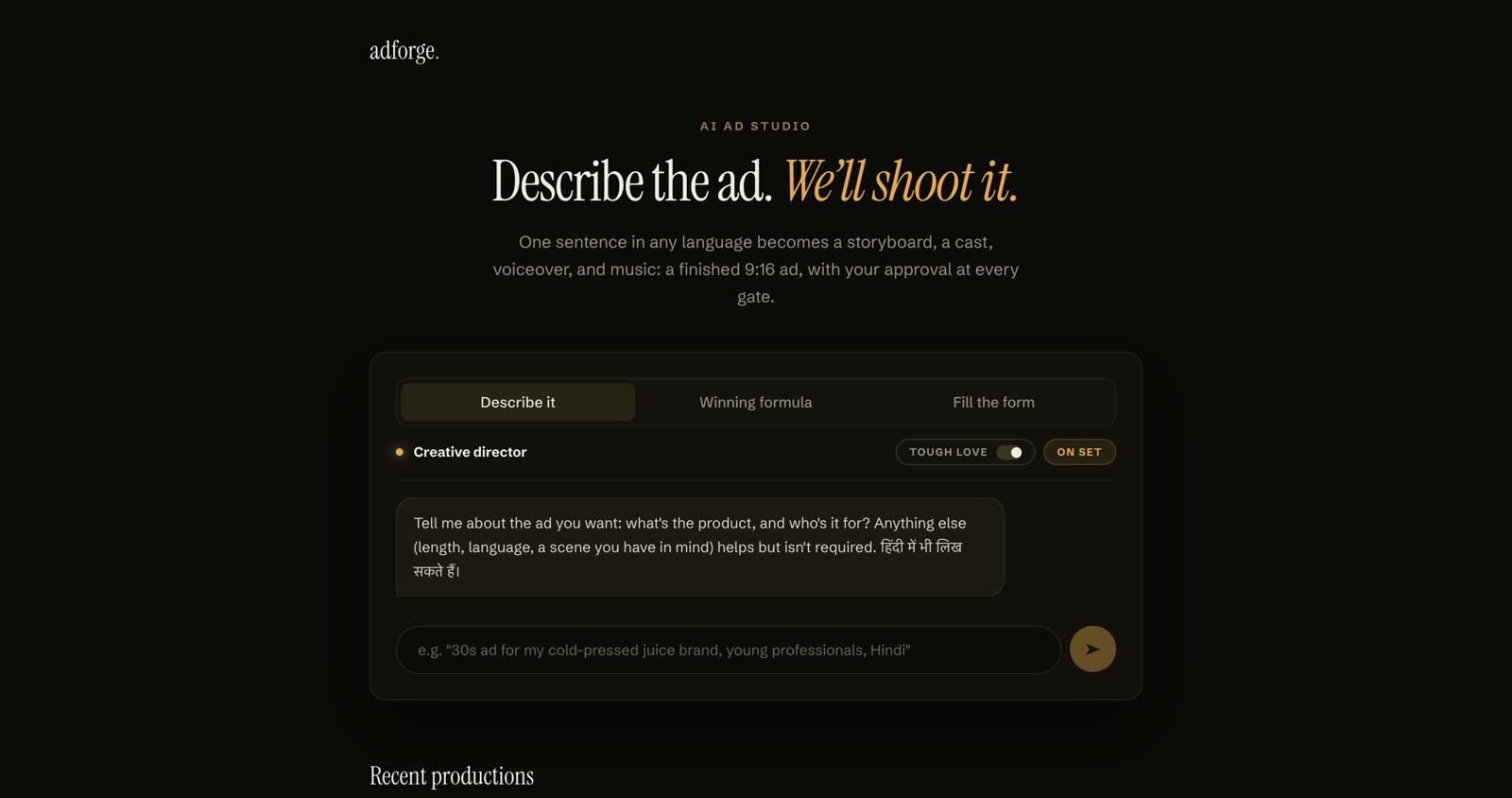
adforge is an ad studio that takes a brief written the way you'd say it out loud, in English or Hindi, and turns it into a storyboard, a cast, locations, voiceover, music and captions, then renders every shot and stitches them into one 9:16 film.
Most video models give you five or ten good seconds. The hard part of a long ad is everything between the shots: the same face in shot one and shot twenty-nine, the same kitchen when the story comes back to it, a voice that matches the lips. adforge exists to manage that, and to stop and ask before it spends money on a script nobody approved.
One cast, held across a render
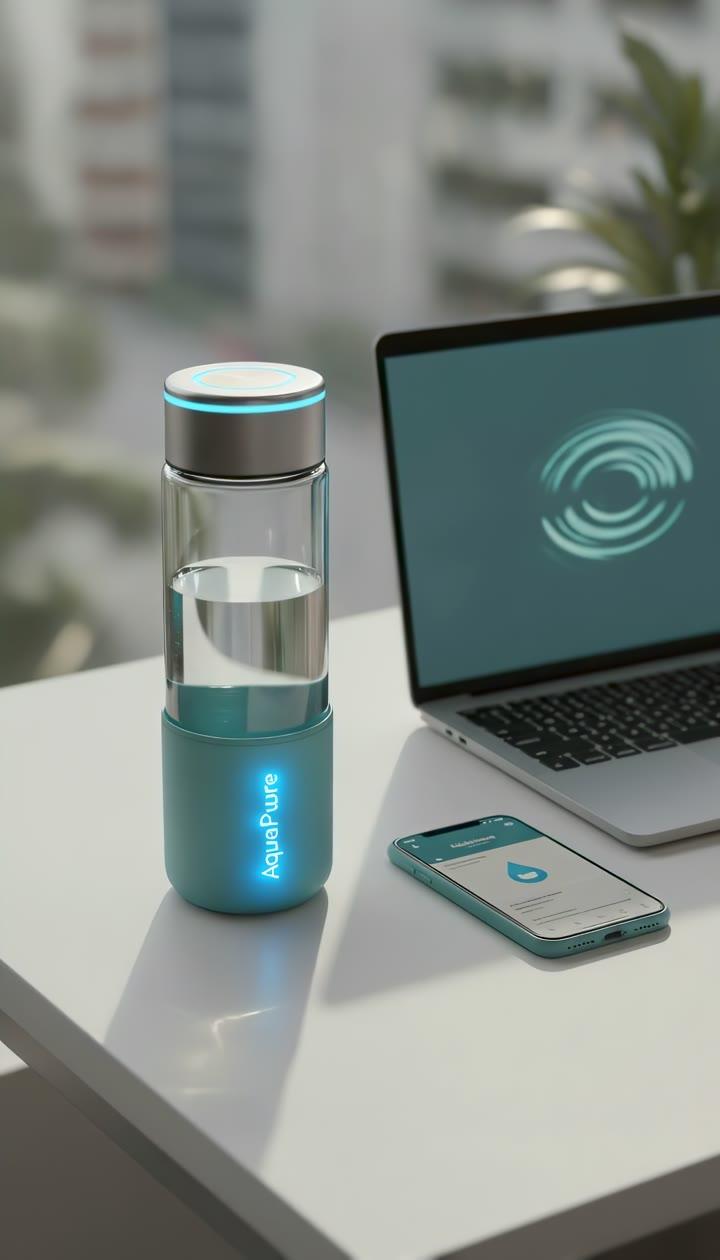
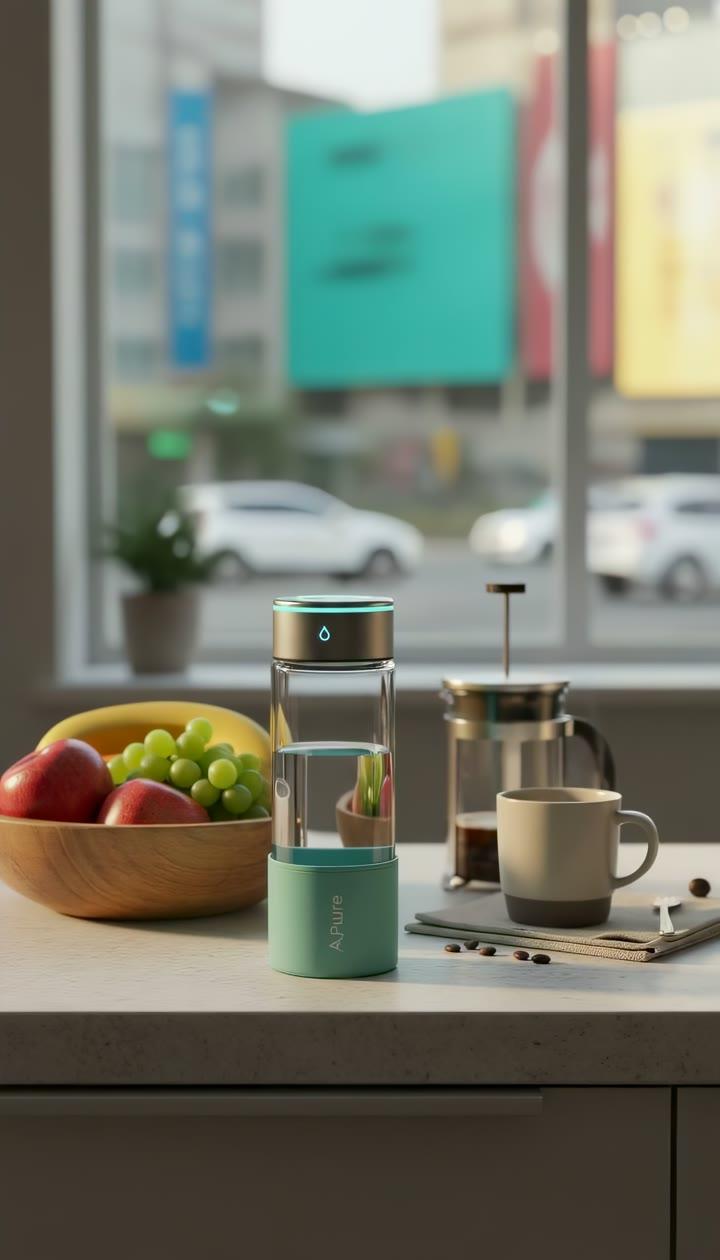
Five frames from one 29-second render of a Hindi brief for a smart water bottle. She's the same person in the same top and watch every time the story comes back to her, and the bottle keeps its shape from the desk to the kitchen.



It starts as a conversation
The brief is a chat with a creative director that offers two or three concepts to pick from, and has a tough-love switch for when you want it to push back on a weak idea. You can skip the chat and fill a form instead, or write the whole thing in Hindi.
Length runs from 15 seconds to three minutes. The storyboard writer sizes every shot to how long its line takes to say, about two and a half words a second, so a 60-second brief comes back with roughly 150 words of script split across the shots.
Or bring an ad that already works
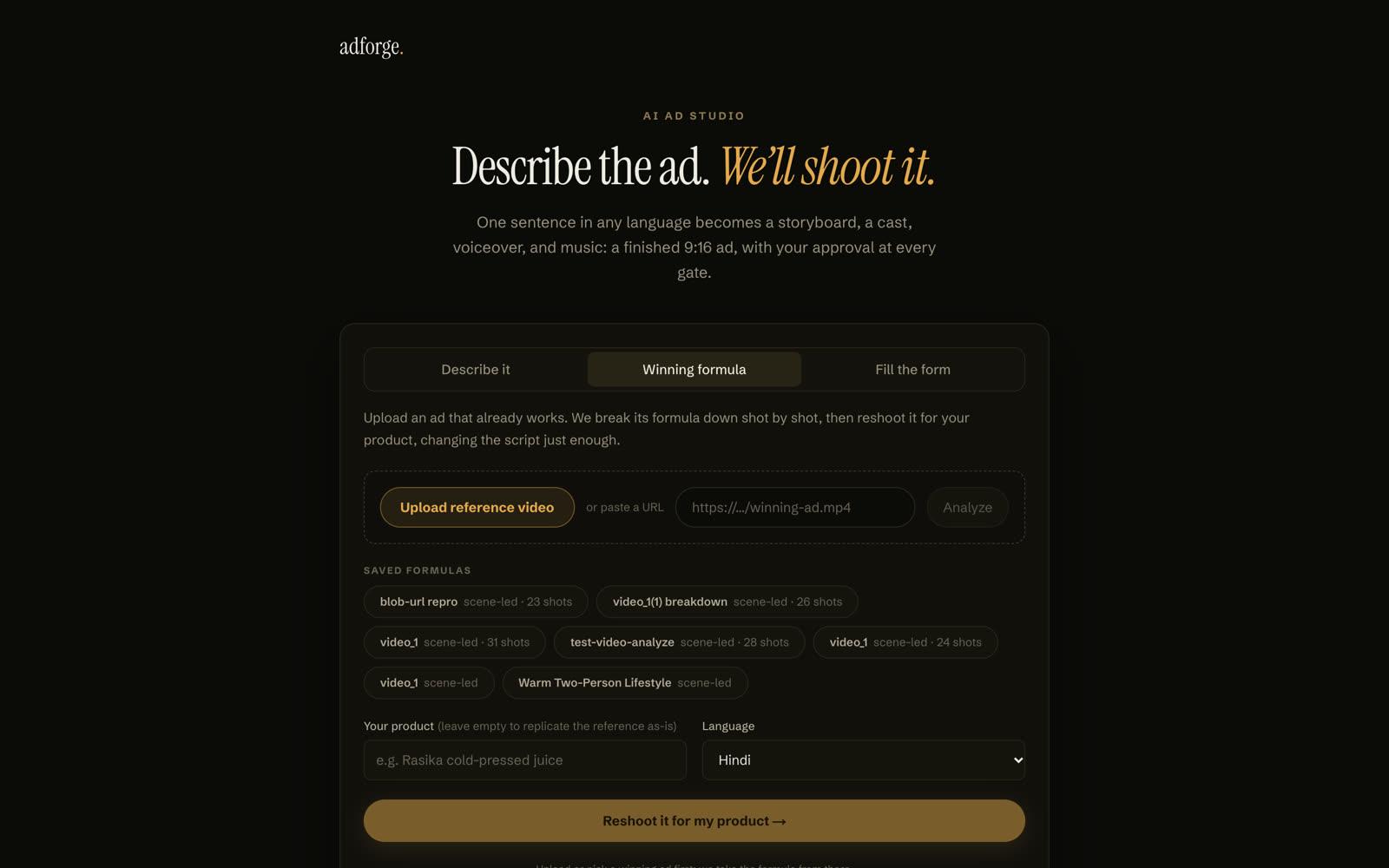
The Winning formula tab takes a reference video, either uploaded or linked. adforge breaks it down shot by shot into its formula, the hook, the pacing, who says what and where, then reshoots that structure for your product, changing the script only as much as it has to.
Analysed references are saved, so a format that worked for one brand can be reused for the next one without analysing the video again.
Three gates before anything is rendered
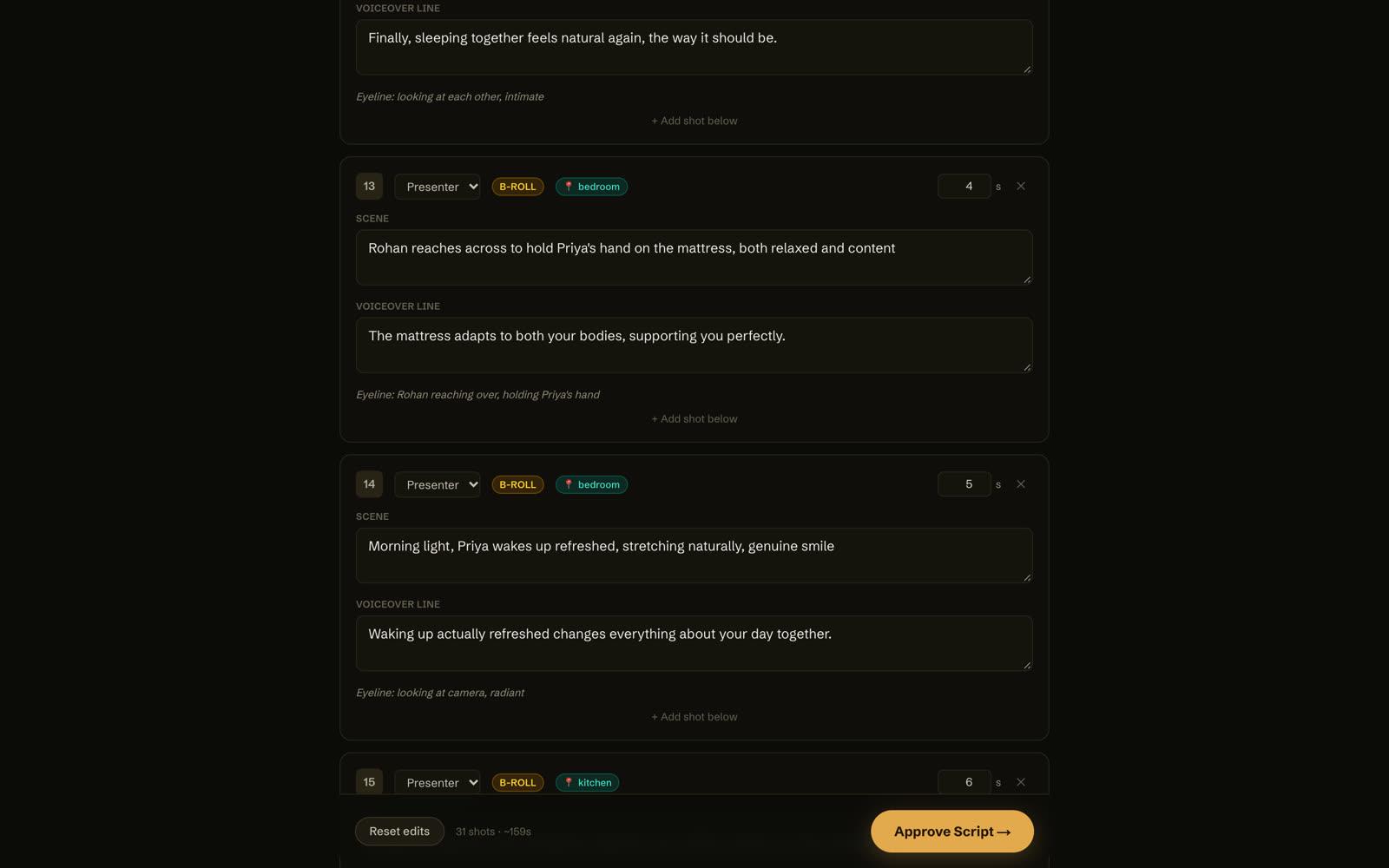
Video is the expensive step, so adforge stops twice before it. At the script gate every shot is editable: its type, scene, spoken line, camera and length. Approving the script builds the world, which means a cast sheet, the locations and any app screens, each of which you can regenerate or swap for a real photo. Then it draws one reference frame per shot, locked to that cast and style.
Frames are where you catch a wrong face or a wrong room for the price of an image. Approving them shows the running cost against a ceiling, and if the estimate is over the cap the app asks you to confirm before it renders any video.
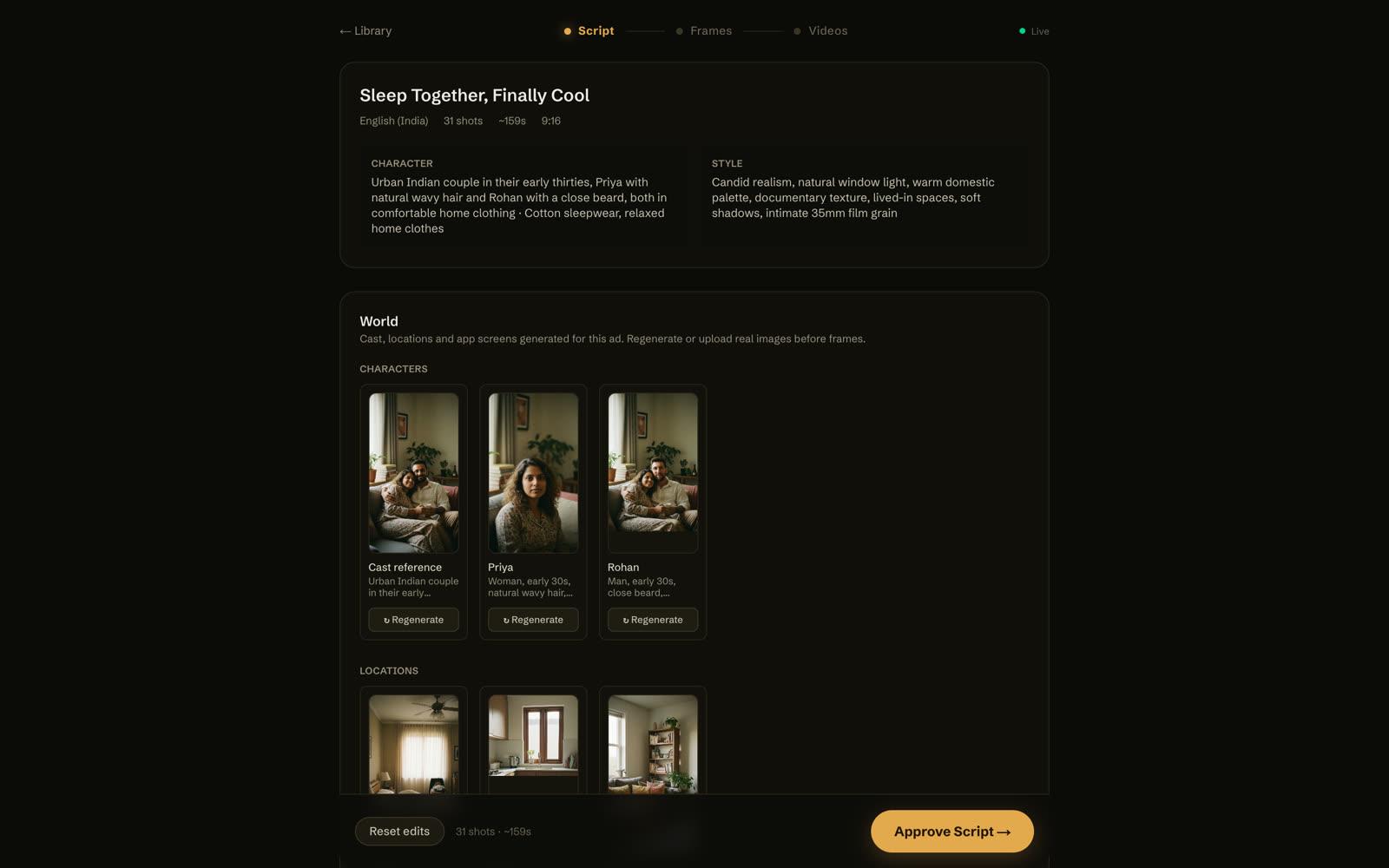
Script gate for a mattress ad: 31 shots, about 159 seconds. 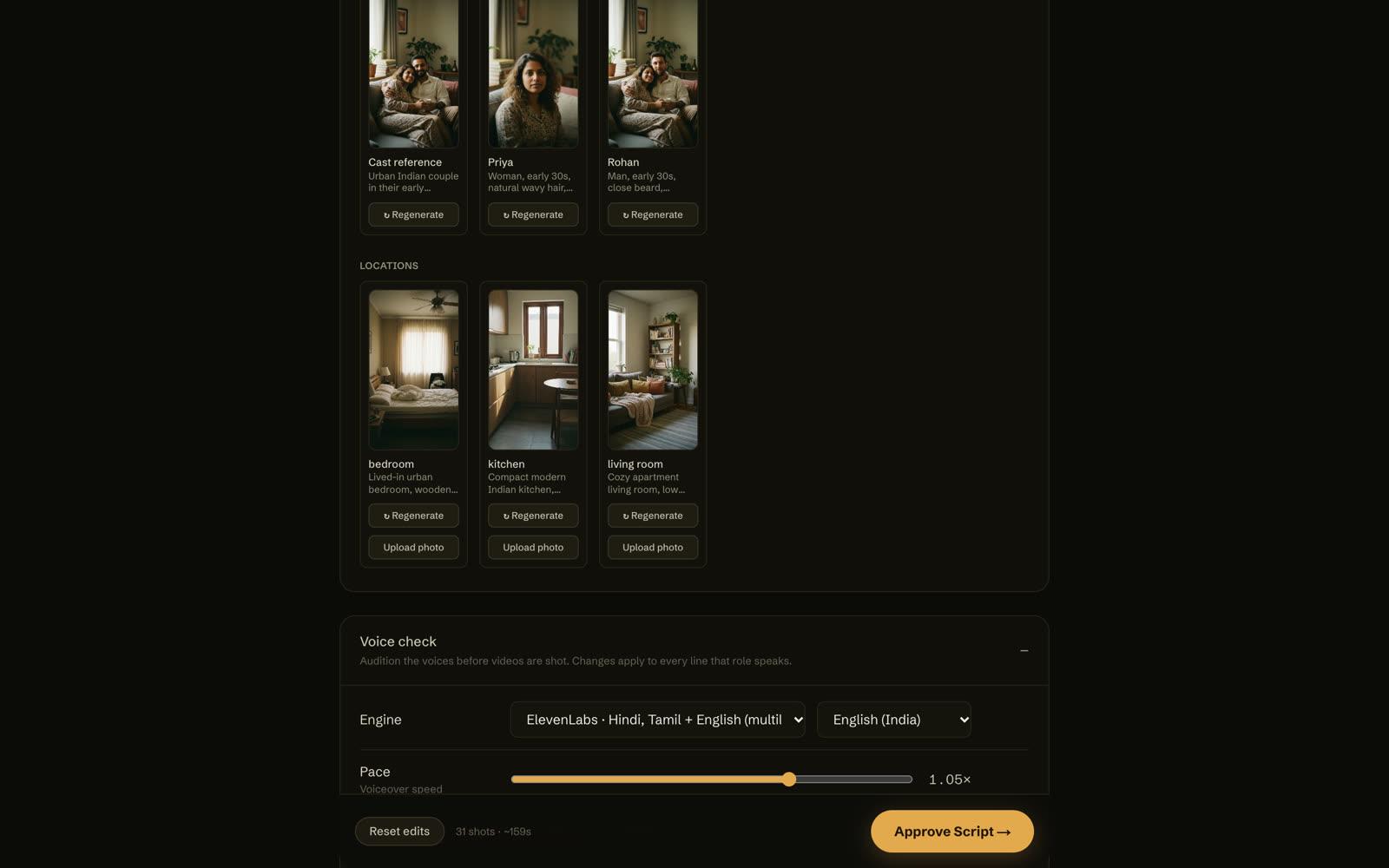
The world: cast and locations, generated or uploaded before any frame is drawn.
Long renders that hold together
Every shot renders on Seedance 2.5 with the cast sheet and its reference frame passed in. When one shot has to continue into the next, like a camera that keeps moving across the same desk, it's told to end on the next shot's approved frame. That frame exists before any video does, so even a chain of continuous shots renders in parallel, and the two clips meet on a clean generated frame instead of a motion-blurred one. Presenter shots get their dialogue in the prompt, so the model generates the voice and the lip movement together, with the TTS take passed in as a voice reference.
As each shot lands it gets normalised straight away on trigger.dev, so the stitch at the end is mostly a stream copy. One final encode burns in captions built from the script, which works for Devanagari where auto-transcription doesn't, adds the brand mark, and ducks the music under the voiceover. If any of that degrades, the ad still ships and the warning goes into a banner.
The cut, captions and all
The last gate hands over the MP4 and a caption file. Finished films are copied to durable storage, because the model host's links expire after three days.
Every stage keeps a running cost estimate against a ceiling, which is what makes a three-minute brief something you can run without checking a bill afterwards.
Where it lives
The repo is private and the deployment sits behind a sign-in, so the screenshots on this page are from a local run against real projects. Write to me if you'd like a walkthrough.